2026 Gaudí Year
Culture11/03/2026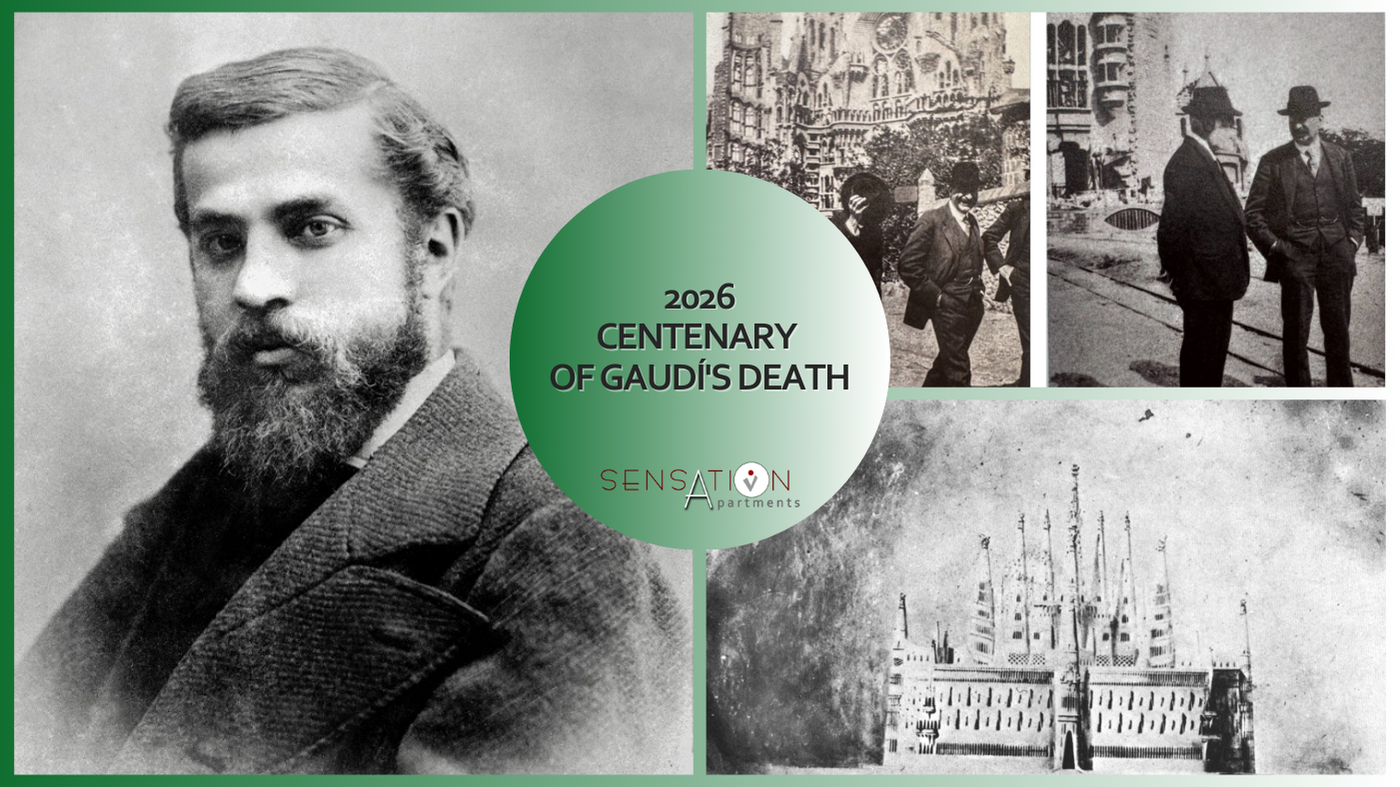
In 2026 the city is experiencing a very special moment: the Gaudí Year , a great cultural celebration commemorating the centenary of the death of Antoni Gaudí, the architect who forever transformed the urban landscape of Barcelona and turned it into one of the most fascinating cultural destinations in the world.
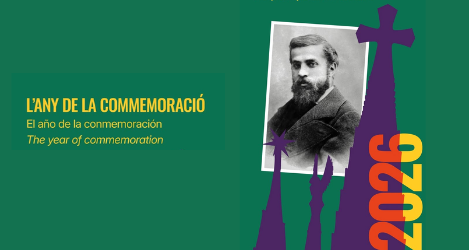
To coincide with the centenary of his death, Barcelona celebrates the architect's legacy with an extensive cultural program. Throughout the year, the city hosts light mapping installations on iconic facades such as Casa Batlló and the Sagrada Familia , thematic exhibitions in museums like the MNAC and the Museu d'Història de Catalunya , the restoration of historic spaces like Casa Vicens , and new developments in the construction of the Sagrada Familia . Furthermore, Barcelona also celebrates its designation as World Capital of Architecture .
Few stories reflect the relationship between Gaudí and Barcelona better than the last days of his life. On June 7, 1926, while walking to the church of Sant Felip Neri to pray, the architect was hit by a tram on Barcelona's Gran Via. His humble appearance—he was dressed very simply and had spent weeks practically dedicated solely to the Sagrada Familia—meant that initially no one recognized him.
He was taken to the Hospital de la Santa Creu as an unknown patient. Only the following day were several colleagues able to identify the architect. Gaudí died three days later, on June 10, 1926, leaving his most ambitious work, the Sagrada Familia, unfinished.
His funeral drew thousands of citizens who accompanied the coffin from the hospital to the basilica. Today, the architect rests in the crypt of the Sagrada Familia, the temple to which he dedicated the last years of his life.
Some key moments in the life and work of Antoni Gaudí in Barcelona:
Many of Gaudí's most important works are located within a few kilometers of each other, making them easy to visit during a stay in the city. One of the epicenters of the celebration is the Sagrada Familia . The temple is organizing various commemorative activities related to key moments in its history. Among these is the commemoration of the 100th anniversary of the tower of Sant Barnabé , completed in 1925, one of the first towers finished under Gaudí's direction. Details of the centenary program can be found on the project's official website: https://sagradafamilia2026.org/es/ .
This program also includes the exhibition “The Sagrada Familia and Barcelona: 144 Years of Shared Journey,” which explains how the temple and the city have evolved together for over a century. Information about the exhibition and related activities can be found on the official anniversary website: https://sagradafamilia2026.org/es/programacion/ . Music is also an integral part of the celebration. Throughout the year, special concerts are held in the basilica, including performances by the prestigious Orfeó Català . The concert schedule can be found at: https://sagradafamilia.org/es/agenda .
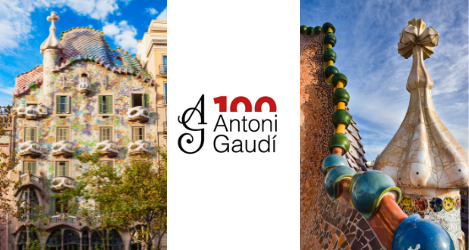
Another must-see during the Gaudí Year is Casa Batlló , one of the world's most admired Modernist buildings. During the first few months of the year, the building's façade is transformed into a spectacular artistic stage thanks to the "Hidden Order" mapping projections. This event combines digital art, architecture, and music, and is part of the special Gaudí Year program. More information about this artistic intervention can be found at: https://www.casabatllo.es/novedades/ano-gaudi-2026/
Casa Batlló also presents the new immersive experience “Beyond the Façade,” an exhibition that explores Gaudí’s creative process through visual recreations and digital technology. Details of this experience can be found at: https://www.casabatllo.es/ .
The Gaudí Year also brings new developments to Casa Vicens , considered Gaudí's first major work in Barcelona. Following a restoration process, the historic smoking room has reopened to the public, allowing visitors to discover one of the building's most unique spaces. Information about visiting and the museum's new features can be found at: https://casavicens.org/ .
Another key building in the architect's oeuvre is the Palau Güell , which is participating in the anniversary celebrations with several exhibitions related to Modernism and the artists who collaborated with Gaudí. Highlights include “Gaudí, Windows to the Future,” dedicated to the art of Modernist stained glass, and an exhibition on the designer and cabinetmaker Francesc Vidal i Jevellí . The building's full cultural program can be found at: https://palauguell.cat/ .
The Gaudí Year cultural program also extends to Barcelona's major museums. The Museu Nacional d'Art de Catalunya (MNAC) presents the exhibition “More Gaudí. Reflections and Analogies,” which explores the connections between the architect's work and other artistic movements. The museum's full schedule is available at: https://www.museunacional.cat/es .
In addition, La Pedrera – Casa Milà is hosting an International Congress on Gaudí , bringing together architects and researchers from around the world to analyze the architect's influence on contemporary architecture. Information about the congress and other activities can be found at: https://www.lapedrera.com/es/actividades .
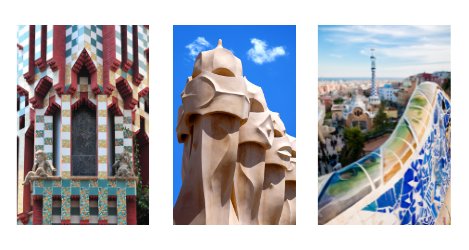
For those who wish to explore Gaudí's work more comprehensively, the Gaudí Year also offers a series of Gaudí-themed itineraries that allow visitors to explore some of his most emblematic buildings. These routes include special visits to the Crypt of the Colònia Güell , tours of Casa Milà and Park Güell , and the opportunity to discover the fascinating Bellesguard Tower . Information about these routes and visits can be found on the city's official tourism website: https://www.barcelonaturisme.com/ .
These routes allow us to understand how Gaudí integrated nature, geometry and symbolism into his architecture, creating unique spaces that are now part of Barcelona's cultural heritage.
• Holy Family
• Casa Batlló
• Casa Milà – La Pedrera
• Park Güell
• Casa Vicens
• Palau Güell
• Bellesguard Tower
• Crypt of the Colònia Güell
Due to the high level of interest in these activities during the Gaudí Year 2026 , it is recommended to book in advance to guarantee availability for visits and events.
If you're planning a trip to Barcelona during Gaudí Year, staying near the Sagrada Familia is one of the best ways to experience this cultural celebration. From Sensation Apartments Barcelona, you can easily discover some of the architect's most important buildings on foot and explore the rest of this modernist city.
To coincide with the centenary of his death, Barcelona celebrates the architect's legacy with an extensive cultural program. Throughout the year, the city hosts light mapping installations on iconic facades such as Casa Batlló and the Sagrada Familia , thematic exhibitions in museums like the MNAC and the Museu d'Història de Catalunya , the restoration of historic spaces like Casa Vicens , and new developments in the construction of the Sagrada Familia . Furthermore, Barcelona also celebrates its designation as World Capital of Architecture .
Few stories reflect the relationship between Gaudí and Barcelona better than the last days of his life. On June 7, 1926, while walking to the church of Sant Felip Neri to pray, the architect was hit by a tram on Barcelona's Gran Via. His humble appearance—he was dressed very simply and had spent weeks practically dedicated solely to the Sagrada Familia—meant that initially no one recognized him.
He was taken to the Hospital de la Santa Creu as an unknown patient. Only the following day were several colleagues able to identify the architect. Gaudí died three days later, on June 10, 1926, leaving his most ambitious work, the Sagrada Familia, unfinished.
His funeral drew thousands of citizens who accompanied the coffin from the hospital to the basilica. Today, the architect rests in the crypt of the Sagrada Familia, the temple to which he dedicated the last years of his life.
Some key moments in the life and work of Antoni Gaudí in Barcelona:
1883 — Gaudí takes over the direction of the works of the Sagrada Familia.
1885-1888 — Construction of Casa Vicens , his first major work in the city.
1886-1890 — Construction of the Palau Güell , one of the most innovative buildings of modernism.
1904-1906 — Renovation of the spectacular Casa Batlló on Passeig de Gràcia.
1906-1912 — Construction of Casa Milà (La Pedrera) , considered one of his most revolutionary works.
1914 — Gaudí decides to dedicate himself almost exclusively to the construction of the Sagrada Familia.
1926 — Death of the architect in Barcelona after the tram accident.
Many of Gaudí's most important works are located within a few kilometers of each other, making them easy to visit during a stay in the city. One of the epicenters of the celebration is the Sagrada Familia . The temple is organizing various commemorative activities related to key moments in its history. Among these is the commemoration of the 100th anniversary of the tower of Sant Barnabé , completed in 1925, one of the first towers finished under Gaudí's direction. Details of the centenary program can be found on the project's official website: https://sagradafamilia2026.org/es/ .
This program also includes the exhibition “The Sagrada Familia and Barcelona: 144 Years of Shared Journey,” which explains how the temple and the city have evolved together for over a century. Information about the exhibition and related activities can be found on the official anniversary website: https://sagradafamilia2026.org/es/programacion/ . Music is also an integral part of the celebration. Throughout the year, special concerts are held in the basilica, including performances by the prestigious Orfeó Català . The concert schedule can be found at: https://sagradafamilia.org/es/agenda .
Another must-see during the Gaudí Year is Casa Batlló , one of the world's most admired Modernist buildings. During the first few months of the year, the building's façade is transformed into a spectacular artistic stage thanks to the "Hidden Order" mapping projections. This event combines digital art, architecture, and music, and is part of the special Gaudí Year program. More information about this artistic intervention can be found at: https://www.casabatllo.es/novedades/ano-gaudi-2026/
Casa Batlló also presents the new immersive experience “Beyond the Façade,” an exhibition that explores Gaudí’s creative process through visual recreations and digital technology. Details of this experience can be found at: https://www.casabatllo.es/ .
The Gaudí Year also brings new developments to Casa Vicens , considered Gaudí's first major work in Barcelona. Following a restoration process, the historic smoking room has reopened to the public, allowing visitors to discover one of the building's most unique spaces. Information about visiting and the museum's new features can be found at: https://casavicens.org/ .
Another key building in the architect's oeuvre is the Palau Güell , which is participating in the anniversary celebrations with several exhibitions related to Modernism and the artists who collaborated with Gaudí. Highlights include “Gaudí, Windows to the Future,” dedicated to the art of Modernist stained glass, and an exhibition on the designer and cabinetmaker Francesc Vidal i Jevellí . The building's full cultural program can be found at: https://palauguell.cat/ .
The Gaudí Year cultural program also extends to Barcelona's major museums. The Museu Nacional d'Art de Catalunya (MNAC) presents the exhibition “More Gaudí. Reflections and Analogies,” which explores the connections between the architect's work and other artistic movements. The museum's full schedule is available at: https://www.museunacional.cat/es .
In addition, La Pedrera – Casa Milà is hosting an International Congress on Gaudí , bringing together architects and researchers from around the world to analyze the architect's influence on contemporary architecture. Information about the congress and other activities can be found at: https://www.lapedrera.com/es/actividades .
For those who wish to explore Gaudí's work more comprehensively, the Gaudí Year also offers a series of Gaudí-themed itineraries that allow visitors to explore some of his most emblematic buildings. These routes include special visits to the Crypt of the Colònia Güell , tours of Casa Milà and Park Güell , and the opportunity to discover the fascinating Bellesguard Tower . Information about these routes and visits can be found on the city's official tourism website: https://www.barcelonaturisme.com/ .
These routes allow us to understand how Gaudí integrated nature, geometry and symbolism into his architecture, creating unique spaces that are now part of Barcelona's cultural heritage.
• Holy Family
• Casa Batlló
• Casa Milà – La Pedrera
• Park Güell
• Casa Vicens
• Palau Güell
• Bellesguard Tower
• Crypt of the Colònia Güell
Due to the high level of interest in these activities during the Gaudí Year 2026 , it is recommended to book in advance to guarantee availability for visits and events.
If you're planning a trip to Barcelona during Gaudí Year, staying near the Sagrada Familia is one of the best ways to experience this cultural celebration. From Sensation Apartments Barcelona, you can easily discover some of the architect's most important buildings on foot and explore the rest of this modernist city.